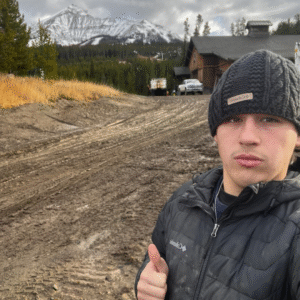

If you’re a young adult feeling overwhelmed about your future right now, you’re not alone.
And if you’re a parent watching your son or daughter struggle with uncertainty, stress, or lack of direction, you’re definitely not alone either.
Anxiety among young people has risen dramatically over the last decade, especially during periods of major life transition. Psychologists point to a combination of factors including uncertainty about careers, social pressure, digital overload, isolation, rising costs of living, and constant comparison through social media.
For many students, the transition after high school or during college feels less like an exciting next chapter and more like standing in front of a thousand possible paths with no clear idea which one is right.
That uncertainty can feel paralyzing.
But there’s something important many young people and parents are beginning to realize:
Anxiety often grows when people feel stuck, disconnected, or uncertain about their role in the world.
And one of the most effective ways to build confidence is not just through thinking differently, but through experiencing life differently.
Why young adults today feel more overwhelmed than previous generations
Young people today are growing up in a world where they’re constantly exposed to information, comparison, and pressure.
Social media creates unrealistic expectations.
AI and automation are changing conversations around careers.
College costs continue to rise.
The future feels harder to predict.
Psychologists have noted that modern anxiety is often tied to uncertainty and the feeling that something bad could happen in the future, even when there’s no immediate danger.
At the same time, many young adults spend enormous amounts of time online and less time:
- in nature
- building in-person community
- gaining real-world independence
- solving problems outside structured environments
Research around “digital anxiety” suggests that excessive screen time and social comparison are strongly connected to higher levels of stress, rumination, and feelings of inadequacy.
The problem with trying to “figure everything out” from your bedroom
A lot of young people are trying to solve life questions entirely in their head.
What should I do with my life?
Should I go to college?
What career should I choose?
What if I make the wrong decision?
But clarity rarely comes from endless overthinking.
It usually comes from experience.
You learn about yourself by:
- trying things
- meeting new people
- entering unfamiliar environments
- taking on responsibility
- discovering what energizes you
Without those experiences, it’s easy for anxiety to grow because your world becomes smaller while your worries become bigger.
Why movement and experience matter so much
One of the most effective ways to interrupt anxiety loops is through meaningful action.
That doesn’t mean ignoring mental health or pretending anxiety isn’t real. Anxiety disorders are serious and should be treated appropriately when needed.
But many young adults also benefit from:
- building routines
- developing independence
- spending less time isolated online
- increasing face-to-face connection
- gaining confidence through real-world experiences
Psychologists consistently point to exposure, resilience-building, and connection as important parts of reducing unhealthy anxiety over time.
This is where travel, work, and community experiences can become incredibly valuable.
Why travel and work experiences help young people grow
When young adults step into a new environment, something shifts.
They begin solving real problems.
They interact with different kinds of people.
They become more adaptable.
They start seeing themselves differently.
Travel and work experiences naturally build:
- confidence
- resilience
- communication skills
- independence
- perspective
These experiences help young adults stop viewing themselves only through the lens of school performance or social comparison.
Instead, they start building an identity based on capability and lived experience.
Community matters more than people realize
One of the strongest protective factors against anxiety is connection.
Not surface-level connection. Real community.
Many young adults today feel isolated even while constantly connected online.
Being surrounded by peers who are:
- exploring life
- learning independence
- trying new things
- supporting one another
creates an environment where people feel less alone in what they’re experiencing.
Growth happens faster when people realize they’re not the only ones figuring things out.
Parents are asking the right questions
Parents today are increasingly wondering:
- Is my child actually ready for college right now?
- Are they confident enough to live independently?
- Will another four years in a classroom solve the problem?
- What kind of experience would actually help them grow?
These are important questions.
Because sometimes what a student needs most is not more pressure.
It’s a chance to:
- gain confidence
- build life skills
- experience responsibility
- reconnect with purpose and excitement
Where AdventureEXP fits in
AdventureEXP was built around the idea that growth happens through experience.
Through structured travel and work experiences, young adults:
- live in new places
- build friendships and community
- earn money
- gain independence
- develop confidence in real-world settings
Instead of staying stuck in cycles of uncertainty, participants begin building momentum through action.
The goal is not perfection.
Anxiety is not a sign that you’re failing
One of the most important things young people can understand is this:
Feeling uncertain about your future does not mean something is wrong with you.
You are living during a time of enormous change and complexity. Many young adults are searching for:
- purpose
- identity
- belonging
- direction
The answer usually doesn’t arrive all at once.
It develops through experiences, relationships, challenges, and movement.
Final thought
You cannot think your way into confidence.
You build confidence by doing hard, meaningful, exciting things and realizing you can handle them.
For many young adults, the next step is not about having the perfect five-year plan.
It’s about stepping into experiences that help them grow into the person they’re becoming.
Sometimes the best way forward is not to stay frozen trying to figure life out.
It’s to go experience it.