
You Don’t Have to Go Straight to College
For as long as you can remember, there has probably been a fairly simple story about what happens after high school.
Graduate.
Go to college.
Get a degree.
Get a job.
Build a career.
It works for a lot of people.
But it doesn’t work for everyone.
Maybe you’re not sure what you want to study.
Maybe you don’t know what career you want.
Maybe you’re burned out after 13 years of school.
Maybe you’re curious about traveling.
Maybe you want to work and save money.
Maybe you want to experience living somewhere completely different.
Maybe you simply don’t feel ready to spend tens of thousands of dollars deciding what you want to do.
And maybe you’re wondering:
“What am I supposed to do instead?”
The good news is that there are a lot more options than you might think.
Your Options After High School Are Bigger Than College or Nothing
Not going straight to college doesn’t mean sitting on your parents’ couch for a year.
You can work.
Travel.
Learn a trade.
Start an apprenticeship.
Volunteer.
Take classes.
Start a business.
Join the military.
Complete a certification.
Intern.
Take a structured gap year.
Work somewhere you’ve never lived.
Or combine several of these.
The question isn’t simply:
“Should I go to college?”
A better question is:
“What would help me become a more capable, experienced and confident person over the next year?”
That changes the conversation.
You Don’t Have to Know What You Want Yet
At 18, you’re being asked to make decisions that can feel enormous.
What should I major in?
What career should I choose?
Where should I live?
What am I good at?
What do I want my life to look like?
The problem is that you may not have enough information to answer those questions yet.
That’s not a character flaw.
It’s because you haven’t experienced enough of the world.
You haven’t had enough jobs.
You haven’t lived in enough places.
You haven’t met enough people.
You haven’t tried enough things.
You haven’t had enough opportunities to discover what you’re good at.
That’s one reason a period of intentional exploration can be so valuable.
Experience Can Help You Make Better Decisions
Imagine two 18-year-olds.
One spends the next year thinking about what career they might want.
The other works three different jobs, travels somewhere new, lives with other young adults, meets people from different backgrounds and tries things they’ve never done before.
Neither has necessarily figured out their career.
But the second person has collected a lot more information.
They’ve learned what they enjoy.
They’ve learned what they don’t enjoy.
They’ve discovered strengths they didn’t know they had.
They’ve developed confidence.
They’ve learned how to manage money.
They’ve learned how to work with people.
They’ve learned how to live independently.
They’ve experienced a different way of life.
That information can make the next decision easier.
A Gap Year Doesn’t Have to Mean a Year Off
The phrase “gap year” can sometimes make it sound like you’re putting your life on pause.
You’re not.
A good gap year can be incredibly active.
You can work.
Earn money.
Travel.
Learn.
Build your résumé.
Develop life skills.
Meet people.
Explore careers.
Take classes.
Volunteer.
The difference is that you’re learning outside the traditional classroom.
That’s not doing nothing.
It’s doing something different.
Work Is an Education Too
One of the best things you can do after high school is get a real job.
Not because you’re supposed to start your career immediately.
Because work teaches you things school can’t always teach.
You learn how to show up.
How to communicate.
How to deal with difficult people.
How to manage your time.
How to solve problems.
How to work on a team.
How to take responsibility.
How to earn and manage money.
How businesses operate.
How to handle a bad day and still do your job.
Those skills stay with you.
And if you can gain them somewhere interesting, even better.
What If Your Job Took You Somewhere New?
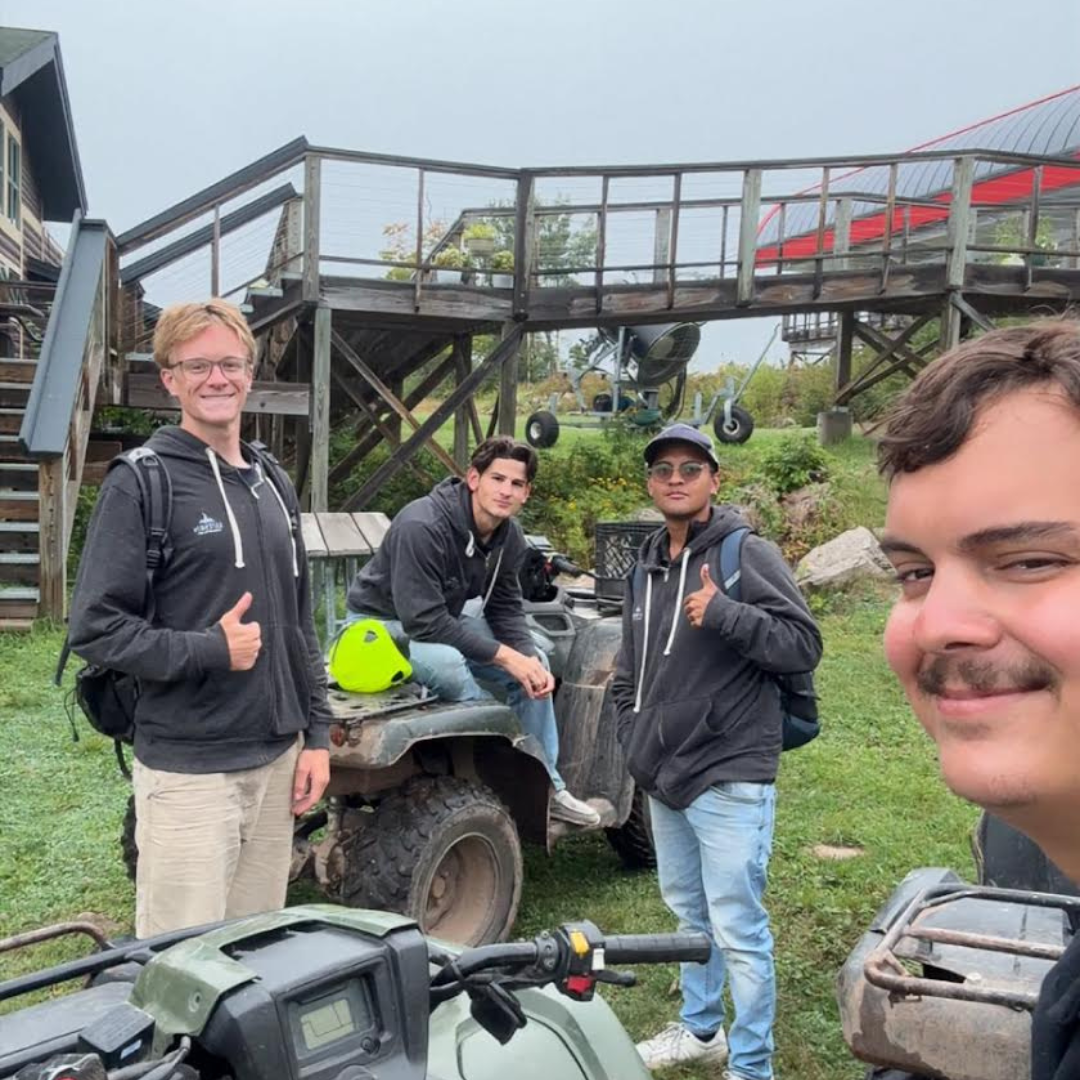
Imagine graduating high school and instead of spending the summer doing the same thing you’ve always done, you move to a mountain town.
You get a job.
You have roommates.
You meet people from across the country.
You spend your days working and your free time exploring.
You learn how to live independently.
You earn money.
You build friendships.
You experience a completely different community.
After a few months, you return home.
You’re not necessarily a different person.
But you probably know yourself a little better.
And you have stories that you wouldn’t have had otherwise.
That’s the potential of combining work and travel.
You Can Make Money and Have an Adventure
One of the biggest misconceptions about travel is that you need to have a lot of money before you can do it.
That’s true for some types of travel.
But it doesn’t have to be true for all of them.
Working while traveling changes the equation.
Instead of simply spending money to visit a place, you can earn money while living there.
You still have expenses.
You still need to budget.
But you’re contributing to the local economy, gaining work experience and helping offset some of the costs of being somewhere new.
For a young person looking for both adventure and financial responsibility, that can be a compelling combination.
You Might Discover a Career by Accident
You don’t always find your future career by taking a career assessment.
Sometimes you stumble into it.
Maybe you work at a hotel and discover you love hospitality.
Maybe you work at a ski resort and discover an interest in outdoor recreation.
Maybe you work in a restaurant and realize you love operations.
Maybe you work with tourists and discover you enjoy sales.
Maybe you meet an entrepreneur who changes the way you think about business.
Maybe you work with your hands and realize you want to pursue a trade.
You can’t predict these discoveries.
You have to create opportunities for them to happen.
You Might Also Discover What You Don’t Want
That’s just as valuable.
Maybe you discover that you hate customer service.
Maybe you don’t like working indoors.
Maybe you don’t want an unpredictable schedule.
Maybe you need more structure.
Maybe you don’t enjoy working alone.
Maybe you don’t want to live in a big city.
That’s useful.
You don’t have to know exactly what you want.
Sometimes knowing what you don’t want eliminates half the possibilities.
That’s progress.
One of the Best Things You Can Do Is Meet Different People
Your high school environment is a relatively small slice of the world.
When you leave it, your world can expand quickly.
You meet people from different states.
Different countries.
Different backgrounds.
Different industries.
Different families.
Different cultures.
Different ideas about what a successful life looks like.
Some will become friends.
Some will become mentors.
Some will become coworkers.
Some may eventually become professional connections.
Some you’ll never speak to again.
All of them give you information about the world.
And about yourself.
Moving Somewhere New Forces You to Grow
There is a difference between visiting somewhere and living somewhere.
When you visit, you can stay comfortable.
When you live somewhere new, you have to figure things out.
Where do I buy groceries?
How do I get to work?
Who do I hang out with?
What do people do here?
How does this community work?
What happens when I have a problem?
You become responsible for your own experience.
That builds independence.
And independence is one of the most important things you can develop after high school.
You Might Make Some of Your Best Friends
There’s another reason working and traveling can be so meaningful at this age.
Everyone is figuring things out.
You’re surrounded by other young people who are also looking for something.
Adventure.
Experience.
Money.
Friendship.
Independence.
A change.
A fresh start.
That creates an unusual kind of community.
You work together.
Live together.
Explore together.
Get lost together.
Celebrate together.
Deal with difficult days together.
And shared experiences have a funny way of turning strangers into friends.
You Don’t Have to Follow Someone Else’s Timeline
Maybe your friends are going to college.
That’s great.
Maybe your parents expect you to go.
That’s understandable.
Maybe everyone you’ve grown up with assumes that’s what you’re going to do.
But your timeline is yours.
Going to college at 18 isn’t inherently better than going at 19.
Starting a career at 21 isn’t inherently better than starting at 23.
Taking a year to work and travel doesn’t mean you’re falling behind.
Life isn’t a race where everyone is supposed to reach the same milestones at the same age.
The important thing is that you’re moving forward.
What If You Used the Next Year to Build Yourself?
Instead of asking:
“What will look best on paper?”
Ask:
“What would make me more capable?”
Maybe that’s working.
Maybe it’s traveling.
Maybe it’s learning a trade.
Maybe it’s volunteering.
Maybe it’s taking a class.
Maybe it’s learning another language.
Maybe it’s living somewhere new.
Maybe it’s doing something that scares you.
Maybe it’s some combination of all of them.
The best next step is often the one that gives you more tools for whatever comes next.
A Year Can Give You More Than a Résumé Line
Imagine telling someone:
“I took a year off.”
That doesn’t tell them much.
Now imagine saying:
“I moved to a mountain town, worked at a resort, lived with five people I’d never met, managed my own budget, made friends from around the country and figured out that I want to study hospitality.”
That’s a different story.
You didn’t just take time off.
You gained experience.
You learned.
You grew.
You discovered something.
And you have a much better idea of what you want to do next.
There Is No Perfect Decision
This is probably the most important thing to remember.
You might make the wrong decision.
You might start college and decide you hate it.
You might take a gap year and decide you want to go to college.
You might choose a job and discover it’s not for you.
You might move somewhere and decide you don’t like it.
That’s okay.
You are allowed to change direction.
In fact, learning how to change direction may be one of the most important life skills you develop.
The goal isn’t to make a perfect decision at 18.
The goal is to become someone who can make decisions, learn from them and keep moving.
So What Should You Do After High School?
If you don’t know, start with something that gives you more information.
Work.
Travel.
Meet people.
Learn something.
Live somewhere new.
Get outside your comfort zone.
Build skills.
Earn money.
Try things.
Pay attention to what you enjoy.
Pay attention to what you’re good at.
Pay attention to the people you meet.
Pay attention to the moments when you think:
“I could see myself doing this.”
That’s how you start building a direction.
Not by having the perfect answer.
By collecting enough experiences that the answer starts becoming clearer.
You Don’t Have to Choose Between Adventure and Responsibility
One of the biggest myths about taking time after high school is that you have to choose between having fun and being productive.
You don’t.
You can work and travel.
You can earn money and make friends.
You can build your résumé and have an adventure.
You can develop life skills while exploring somewhere beautiful.
You can become more independent while figuring out what you want.
Adventure and responsibility can coexist.
In fact, they might be better together.
Start Somewhere
If you’re graduating high school and wondering what comes next, you don’t need to have your entire life mapped out.
You need a next step.
Maybe that next step is college.
Maybe it’s a trade.
Maybe it’s an apprenticeship.
Maybe it’s work.
Maybe it’s travel.
Maybe it’s a structured program that combines several of these things.
What matters is that you’re intentional about it.
Don’t spend a year simply waiting for your life to begin.
Use it.
Go somewhere.
Work.
Earn.
Learn.
Meet people.
Try things.
Become more independent.
And give yourself the opportunity to discover something you couldn’t have discovered by staying exactly where you were.
At AdventureEXP, that’s what our Destination Work Programs are designed to help young adults do.
You can move somewhere new, work a real job, earn money, live alongside other young adults, explore your destination and develop the real-world skills that come from being responsible for your own life.
You don’t have to know exactly what comes after.
You just have to be willing to take a meaningful next step.
Because sometimes the best answer to “What should I do with my life?” isn’t another hour spent thinking about it.
Sometimes it’s:
“Go find out.”