
Maybe college looked different in your head.
You imagined meeting your people.
You imagined loving your classes.
You imagined living somewhere new, becoming independent and figuring out who you were.
Instead, you’re sitting in a dorm room wondering why you don’t feel excited.
Maybe you’re bored.
Maybe you’re overwhelmed.
Maybe you don’t like your classes.
Maybe you picked a major because it seemed like the right thing to do and now you’re not sure you care about it.
Maybe you like college in theory but hate the actual experience of being there.
Or maybe nothing is particularly wrong. You just have this nagging feeling that this isn’t where you’re supposed to be right now.
And that’s a difficult place to be.
Because everyone around you seems to have an opinion.
Your parents want to know what you’re going to do.
Your friends tell you to stick it out.
Your professors tell you that you’re capable.
Social media makes it look like everyone else is having the best four years of their lives.
And you’re left wondering:
“What if college just isn’t a good fit for me?”
Here’s the first thing you should know:
You are allowed to question whether college is working for you without deciding that your future is over.
College Can Be a Great Choice Without Being the Right Choice Right Now
College is valuable for millions of people.
It can provide education, community, professional connections, specialized training and incredible experiences.
For some careers, a degree is absolutely necessary.
But acknowledging the value of college doesn’t mean pretending that every person needs to follow the same timeline.
Maybe you’re not ready.
Maybe you need a different learning environment.
Maybe you need to work.
Maybe you need to get out of your hometown.
Maybe you need to experience more of the world.
Maybe you need to figure out what you’re actually interested in before spending another year paying tuition to find out.
There is a difference between saying:
“College is worthless.”
and saying:
“I’m not sure college is the best next step for me right now.“
The second statement is completely reasonable.
What If You Don’t Hate College? What If You’re Just Not Ready for It?
This is an important distinction.
You don’t have to hate college to take time away.
You might actually believe you’ll return someday.
You might want a degree eventually.
You might simply realize that you’re 18 or 19 and don’t have enough life experience yet to know what you want to study.
That’s not a character flaw.
It’s incredibly normal.
Think about how much you’re expected to know when you graduate high school.
You’re supposed to choose a major.
Choose a school.
Move away from home.
Manage your finances.
Take care of yourself.
Make decisions about your future.
All while having relatively little experience with the world outside your hometown.
It’s no wonder some people need more time.
Taking a Semester Off Doesn’t Mean Giving Up
One of the most common fears students have is that taking time away from college means they’re dropping out.
It doesn’t have to.
A semester off can be a deliberate pause.
A year away can be a period of exploration.
A gap year after high school can be a structured opportunity to work and travel.
And time away can actually make returning to school more intentional.
The important part is what you do with that time.
There is a big difference between:
“I’m leaving college because I don’t know what else to do.”
and
“I’m taking six months to work, travel, develop skills, explore different environments and figure out what I want my next step to be.”
The first feels like an escape.
The second is a plan.
You May Need Experience More Than You Need Another Semester
When you’re uncertain about your future, it’s tempting to gather more information.
Take another class.
Take another career assessment.
Read another article.
Watch another video.
Talk to another advisor.
Those things can help.
But eventually, you need data from your own life.
You need to experience things.
Work somewhere new.
Live somewhere new.
Meet people who have different perspectives.
Try a job you have never considered.
Spend time outside your normal environment.
Discover what you enjoy.
Discover what you don’t.
That’s experiential learning.
And sometimes it’s the most useful education you can get.
What Can You Do Instead of College?
If you’re questioning college, you have more options than simply staying enrolled or dropping out.
Depending on your situation, you could:
Take a semester off
Use the time intentionally to work, travel, explore careers or develop skills.
Take a gap year
A structured gap year can combine work, travel, education and personal development.
Attend community college
This can be a more affordable way to continue your education while giving yourself additional time to explore.
Learn a trade
Skilled trades can provide strong career pathways without requiring a traditional four-year degree.
Work
A job can give you income, professional experience and insight into what kinds of work you actually enjoy.
Travel and work
A travel and work program can combine earning money, exploring a new destination, building skills and meeting other young adults.
Pursue an internship
If you already have an area of interest, an internship can help you understand what that industry is actually like.
Volunteer
Volunteer experiences can help you explore causes, communities and fields that interest you.
There isn’t one correct alternative to college.
The right choice depends on what you’re trying to learn about yourself.
Why Travel Can Be a Powerful Next Step
If you’ve spent most of your life in the same community, it’s difficult to know how much of your identity comes from you and how much comes from your environment.
Travel gives you a chance to find out.
When you live somewhere new, you have to make decisions.
You have to meet people.
You have to adapt.
You have to navigate unfamiliar situations.
You have to figure out what you like when nobody else is telling you what you should like.
That’s powerful.
And you don’t need to travel to the other side of the world.
Moving to a new state can be enough.
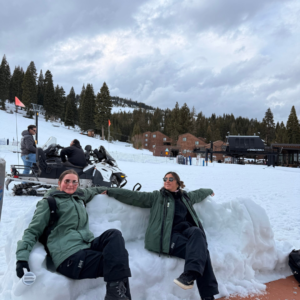
Living in a mountain town.
Working in a national park.
Spending a season near the beach.
Experiencing a community built around tourism and recreation.
Sometimes you don’t need a completely different planet.
You just need a different environment.
Why Working While You Travel Changes the Equation
Travel is often presented as an expensive luxury.
You save money.
You spend money.
You come home.
But working while you travel creates a different model.
Instead of simply paying to experience a destination, you contribute to it.
You work for a real employer.
You earn a paycheck.
You build professional skills.
You meet coworkers.
You become part of a community.
Then, on your days off, you explore.
That combination can be incredibly powerful for someone who isn’t sure what they want next.
You’re not sitting at home trying to figure yourself out.
You’re collecting experiences.
You Might Learn More About Yourself at Work Than You Expected
Maybe you discover that you love working with people.
Maybe you realize you hate sitting behind a desk.
Maybe you love hospitality.
Maybe you discover you’re an excellent leader.
Maybe you enjoy solving problems under pressure.
Maybe you realize you want to work outdoors.
Maybe you find yourself fascinated by tourism, events, recreation or entrepreneurship.
Maybe you simply learn that you want a completely different lifestyle.
All of those discoveries are useful.
Because figuring out what you don’t want is part of figuring out what you do want.
And Yes, You Can Still Have Fun
This matters.
If you’re taking time away from college because you’re exhausted by the idea that everything has to be productive, your next experience shouldn’t feel like another résumé-building exercise.
You’re young.
You should have fun.
You should make friends.
You should explore.
You should stay up too late talking with people.
You should take spontaneous road trips.
You should hike somewhere you’ve never been.
You should watch sunsets.
You should have stories that have nothing to do with your GPA.
The best experiences often accomplish several things at once.
You have fun.
You grow.
You learn.
You make money.
You develop skills.
You become more independent.
That’s much more compelling than trying to optimize every minute of your life for your résumé.
What Your Parents May Be Worried About
They may ask:
“What are you going to do?”
“How will this help your future?”
“What happens if you never go back?”
“Are you just running away?”
“Why should we support this?”
Those are reasonable questions.
And they’re easier to answer when you have a real plan.
Instead of saying:
“I don’t want to go to college anymore.”
Try:
“I want to take a structured amount of time to work, travel, gain experience and figure out what I want. Here’s where I’ll live, here’s how I’ll earn money, here’s what I’ll learn and here’s how we’ll evaluate what I want to do afterward.”
That is a conversation about planning rather than rebellion.
You Don’t Need to Know What Comes Next
This may be the most important thing in this entire article.
You don’t have to know.
Not at 18.
Not at 19.
Not at 20.
Not even at 22.
Your job isn’t to predict the rest of your life.
Your job is to keep learning.
About the world.
About work.
About other people.
And most importantly, about yourself.
Sometimes the best next step is the one that gives you the most useful information.
AdventureEXP: A Different Way to Take Time Away
AdventureEXP is designed for young adults who want to do something meaningful with their time while figuring out what’s next.
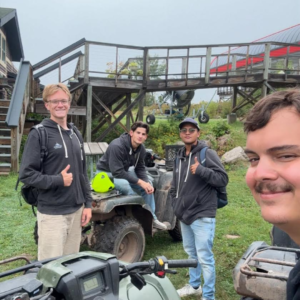
Rather than simply stepping away from college and going home, students can travel to incredible destinations, work for real employers, earn money, live alongside other young adults and develop practical skills.
It’s a structured alternative to simply pressing pause.
You don’t have to decide that college is bad.
You don’t have to decide that you’re never going back.
You don’t have to know exactly what career you want.
You can simply decide that you want to experience more of the world before making your next big decision.
And sometimes that’s exactly what you need.
Maybe You’re Not Falling Behind. Maybe You’re Taking a Different Route.
There is an enormous amount of pressure to move through life in a straight line.
Graduate high school.
Go to college.
Choose a major.
Graduate.
Get a job.
Move forward.
But real lives rarely work that way.
People change majors.
Change careers.
Take breaks.
Move across the country.
Start businesses.
Go back to school.
Discover passions at 25.
Discover them again at 35.
The goal isn’t to stay perfectly on schedule.
The goal is to build a life that actually fits you.
If college isn’t working right now, that doesn’t automatically mean you’ve failed.
It might mean you’ve learned something important.
This isn’t working for me right now.
That’s useful information.
Now you get to decide what to do with it.
Maybe the answer is staying.
Maybe it’s transferring.
Maybe it’s community college.
Maybe it’s a trade.
Maybe it’s work.
Maybe it’s travel.
Maybe it’s a semester away.
Maybe it’s a year of experiences before you come back with a much clearer idea of what you want.
You don’t have to have the entire answer.
You just need a next step that moves you forward.
And sometimes, moving forward means stepping away.