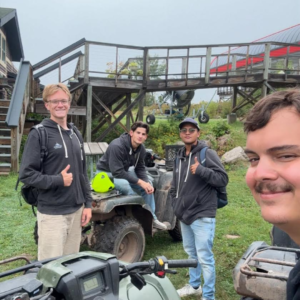

You’ve crossed the finish line — exams done, diploma in hand. Now everyone’s asking the same question: What’s next? College? A job? Travel? If you’re not quite sure, you’re far from alone. Thousands of high school graduates each year feel that same mixture of excitement and uncertainty.
Here’s the thing nobody tells you clearly enough: taking a structured work experience — whether it’s a gap year program, a working holiday, a farm stay, or an international volunteer placement — could be the single most valuable investment you make in your future self. And it doesn’t have to cost a fortune to do it well.
“Work experience after high school isn’t a gap in your resume. It’s the first real chapter of who you’re becoming.”
What Is a Post-High School Work Experience?
A post-school work experience is a structured period — usually between three months and a year — where you take on meaningful work outside the traditional academic environment. This can take many forms: a working holiday visa abroad, a paid internship, a farm work program, a hospitality role at a ski resort or island destination, a volunteering placement combined with paid work, or an outdoor education role.
The key ingredient? You’re doing real work, earning real money, learning real skills — and doing it in an environment that pushes you outside your comfort zone in the best possible way.
1. Learn the Independent Living Skills Nobody Teaches You in School
School teaches algebra. It teaches essay structure and the periodic table. What it rarely teaches you is how to manage a budget when rent is due and your paycheck is two days away. Or how to cook a real meal when you’re exhausted after a 10-hour shift. Or how to have a difficult conversation with a manager you disagree with.
Work experience fills in those gaps in a way no classroom ever could. You’ll discover your own routines, develop your own systems and — crucially — learn from your own mistakes in a low-stakes environment. The skills you come home with — financial literacy, time management, communication and daily self-sufficiency — are precisely what hiring managers and colleges say they want, and almost universally struggle to find in candidates fresh out of high school.
2. Actually Have Fun While You Grow
Here’s what surprises most people: this kind of experience is genuinely, unexpectedly fun. Work experience programs for high school graduates often take place in incredible settings — mountains, vineyards, national parks, coastal towns, bustling city hostels and everywhere in between.
You’ll finish shifts with new friends and discover hobbies you didn’t know you had. You’ll have stories worth telling for the rest of your life. And because you’re earning while you’re living, the experience doesn’t drain you — it sustains you.
Gap year jobs abroad in particular offer a window into cultures and communities you’d never encounter as a tourist. You’re not passing through — you’re part of the rhythm of a place. That changes how you see the world and yourself.
3. Make Real Money and Build Financial Independence Early
One of the most underrated benefits of post-school work experience is the financial one. Rather than accumulating student debt in your first year of college before you’ve even decided what you want to study, you could be building savings, reducing future debt and gaining early financial independence.
Many programs — particularly in agriculture, hospitality, skiing and outdoor education — offer paid roles with accommodation and meals included, which means a high proportion of your earnings are pure savings. Working holiday visa jobs abroad often include room and board, dramatically reducing living costs. Seasonal hospitality and agriculture roles frequently offer tips and bonuses on top of base pay. Paid internships and apprenticeships give you income and a qualification at the same time. Even a modest amount saved during a structured work experience year can change the financial trajectory of the years that follow.
4. Find Your Community — People Who Push You to Grow
Perhaps the most life-changing element of work experience is the people. When you move away from your hometown, away from the friends and social dynamics you’ve known since grade school, you get to build something new: a community of people from different backgrounds, countries and walks of life who are all, like you, figuring out what comes next.
The friendships formed during a gap year or structured work placement often become the most enduring of a person’s life. You meet people under real conditions — not in a lecture hall or a social media feed, but in shared work, shared struggle and shared laughter.
And beyond friendship, the mentors you encounter matter just as much. A supervisor who teaches you how to lead. A colleague who shows you how they built their career from scratch. A local family who opens their home and their perspective to you. These relationships shape your values and ambitions in ways no curriculum ever could.
5. Clarify Your Direction Before You Commit
One of the most expensive mistakes young people make is enrolling in a degree program — racking up tuition and years — before they’ve had any exposure to the working world. Work experience gives you clarity. You discover what you’re good at, what energizes you, what bores you within a week and what kind of environment you thrive in.
That self-knowledge is invaluable when it comes to choosing a career path, a college major or a first full-time role. You arrive at those decisions not as a hopeful teenager guessing, but as someone with genuine experience to draw on.
How to Choose the Right Work Experience for You
Working Holiday Programs — Countries like Australia, New Zealand, Canada and Japan offer working holiday visas for graduates aged 18–30. You can work legally, travel freely and earn as you go. Ideal for those who want maximum flexibility and adventure alongside income.
Structured Gap Year Placements — Organizations and agencies offer curated programs combining volunteer work, skills training and paid employment in a supported environment. Great for those who want structure, mentorship and a clear framework for growth.
Seasonal and Industry-Specific Roles — Ski resorts, surf camps, national parks, farms, vineyards and marine conservation projects all hire seasonally. These roles offer strong community, incredible locations and real practical skills in outdoor leadership, hospitality or agriculture.
Paid Internships and Apprenticeships — For those with a clearer career direction, paid internships and apprenticeships let you earn while gaining industry-specific skills and qualifications. Many lead directly to full-time employment.
The Bottom Line
Taking a structured work experience after high school isn’t delaying your future — it’s accelerating it. You’ll return more self-aware, more capable, more financially literate and more connected to a community that supports your growth than almost any alternative path could offer.
The question isn’t whether you can afford to do it. The question is whether you can afford not to. That’s where AdventureEXP comes in.