
You’re not too old. You might be exactly the right age.
Gap year content is almost entirely aimed at 18-year-olds standing between high school and college, which means a large group of people who would benefit from destination work never see themselves in the conversation. They’re 22, or 24, or 26. They graduated a few years ago, took the job that seemed reasonable at the time, and have been doing it long enough to feel the question nagging at them: is this it?
AdventureEXP gets applications from these people regularly. A chemical engineer who grew up on a blueberry farm and wants to reconnect with outdoor work and people. A librarian in West Virginia who says she ‘needs a major change.’ Someone who’s been working at Disney World for 15 months and knows they’re ready for something different.
None of them are too old for this. In fact, they often make some of the most self-aware and purposeful participants in the program — because they’ve already had the experience of a conventional path and know what they’re looking for.
Why your late 20s is actually a good time for this
At 18, you leave for a gap year without much to compare it to. At 24 or 26, you leave knowing what a regular job feels like — the Monday-to-Friday rhythm, the office politics, the slow accumulation of routine. That context makes the contrast of destination work sharper and more appreciated.
You also bring more to it. You likely have real work skills — customer service, management experience, the ability to navigate a difficult shift without falling apart. Those skills make you a more capable participant and often open up better roles within the placement.
And practically speaking, your mid-20s are usually the last window before life becomes meaningfully harder to step away from: before the mortgage, the long-term relationship with roots, the career track that extracts real costs if you pause it. A season abroad at 25 is far easier logistically than at 35.
What a season gives you that a vacation doesn’t
The appeal of a two-week vacation is real. The limitation is that two weeks isn’t long enough to actually become part of a place. You arrive, you recover from the travel, you do the tourist circuit, you leave.
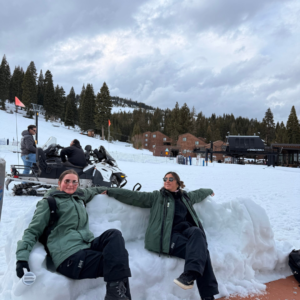
A season — three to six months in a single destination, working and living there — is categorically different. You develop routines. You become a regular somewhere. You know the local trails well enough to have a favorite. The people you work with become your social world. The place becomes familiar in a way that takes time.
One applicant described wanting ‘more than just a typical job experience‘ — wanting to be somewhere people work hard, meet others from around the world, and experience the outdoors in a real and memorable way. A vacation delivers none of that. A season delivers all of it.
The resume question — answered honestly
The standard concern about taking time off in your mid-20s is the gap on your resume. Here’s the honest version of that conversation:
A seasonal hospitality role at a destination venue is real work experience. It demonstrates customer service skills, adaptability, the ability to perform in a fast-paced environment, and interpersonal competence. These are not soft credentials — they’re the things that distinguish people in hiring conversations.
Beyond that: how you describe a career break matters as much as the fact of it. ‘I worked a season in hospitality at a mountain resort’ reads differently than ‘I took some time off.’ The former communicates initiative and intention. Most hiring managers with any self-awareness understand that the kind of person who goes and does something interesting on a break tends to be more interesting to work with.
How to talk to an employer about a planned career break
If you’re currently employed and considering a leave, the cleanest approach is usually directness: explain what you’re planning, why, and for how long. Some employers will grant an unpaid leave. Others won’t — which is information about whether the job is worth returning to.
If you’re between jobs, the decision is simpler: apply for the program before you take the next conventional offer. A season abroad is easier to start than to create space for later.
“I graduated college a couple years ago and have been working at Disney World for 15 months and I am ready for something different. I want to live and work in a new place.”
Ready for something different is enough of a reason. The program is open for all ages — applications for summer, fall, and winter placements are available now.